
Understanding the Gut-Immune Connection: Why Healing Your Gut Changes Everything
When most people think about immunity, they think of vitamins, supplements, or “boosting” their system during illness. But what if the real foundation of your immune health lies somewhere far more fundamental, your gut?
This isn’t just a trend. It’s science.
Your Gut: The Control Center of Immunity
Nearly 70% of your immune system resides in your gut. This means your digestive system is not just responsible for breaking down food—it’s actively involved in protecting your body.
Inside your gut lives a complex ecosystem of trillions of bacteria, known as the gut microbiome. These microbes are not harmful; in fact, they play a crucial role in:
Training your immune system to respond appropriately
Protecting against harmful pathogens
Reducing inflammation
Supporting nutrient absorption
A balanced gut microbiome helps your immune system stay strong yet calm, responsive when needed, but not overreactive.
When the Gut is Imbalanced
Modern lifestyles often disrupt gut health. Poor diet, stress, lack of sleep, antibiotics, and environmental toxins can all lead to gut dysbiosis, an imbalance in gut bacteria.
When this happens, your immune system is affected.
You may start experiencing:
Frequent infections or low immunity
Bloating, gas, constipation, or IBS like symptoms
Skin issues like acne, eczema, or rashes
Food sensitivities
Chronic fatigue or brain fog
In some cases, an unhealthy gut can even trigger chronic inflammation, which is the root cause of many lifestyle diseases.
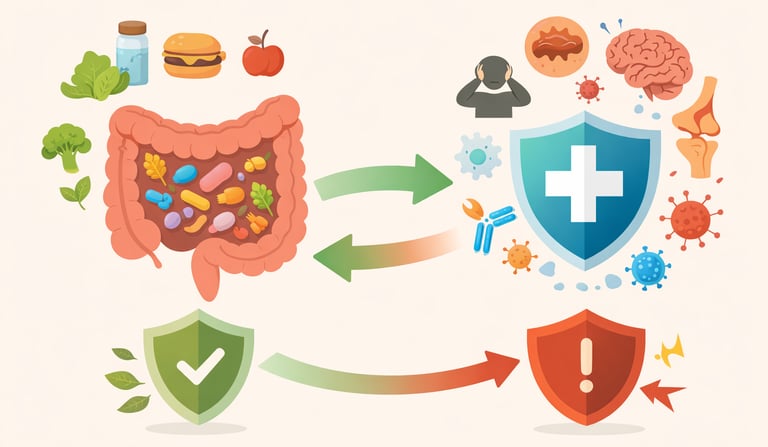
The Gut–Immune Loop
Your gut and immune system are in constant communication.
A healthy gut sends signals that keep inflammation under control
An unhealthy gut triggers immune responses, even when there’s no real threat
This is why many autoimmune conditions, allergies, and even hormonal imbalances often have a gut component.
Healing the gut doesn’t just improve digestion. It stabilizes the entire immune response.
Signs Your Gut May Be Affecting Your Immunity
You don’t need a diagnosis to start paying attention. Some subtle signs include:
Falling sick often or taking longer to recover
Persistent bloating or discomfort after meals
Cravings for sugar or processed foods
Irregular bowel movements
Low energy despite adequate sleep
Your body is always communicating; you just need to listen.
How to Support Your Gut (and Immunity)
Instead of chasing quick fixes, focus on building a strong foundation.
1. Eat Real, Diverse Foods
Include a variety of fruits, vegetables, whole grains, nuts, seeds, and fermented foods. Diversity feeds good bacteria.
2. Prioritize Fiber
Fiber is fuel for your gut microbes. Without it, good bacteria cannot thrive.
3. Manage Stress
Chronic stress directly impacts gut health. Even the best diet won’t work if stress is unaddressed.
4. Sleep Matters More Than You Think
Poor sleep disrupts gut bacteria and weakens immune response.
5. Avoid Overuse of Antibiotics & Processed Foods
These can wipe out beneficial bacteria and create imbalance.
6. Personalization is Key
There is no one-size-fits-all gut protocol. What works for one person may not work for another.
The Bigger Picture
Gut health is not about perfection. It’s about consistency, awareness, and addressing the root cause, not just symptoms.
If you’ve been struggling with immunity, digestion, skin, or even hormones, your gut may be the missing link.
And once you start working on it, everything begins to shift.
A Gentle Reminder
You don’t need extreme diets, detoxes, or restrictions.
You need the right guidance, the right approach, and a plan that fits your life.
Because real health is not about short-term fixes.
It’s about sustainable change.
And it always begins from within.
If this resonates with you, start by observing your body,not judging it.
That’s always the first step toward healing.